



New Growth Opportunities in China’s 100-Billion-Yuan Tissue Market: Technology, Scenarios, and Brand Trust as Core Drivers
Industry Overview: Rising Consumption and Strong Market Momentum
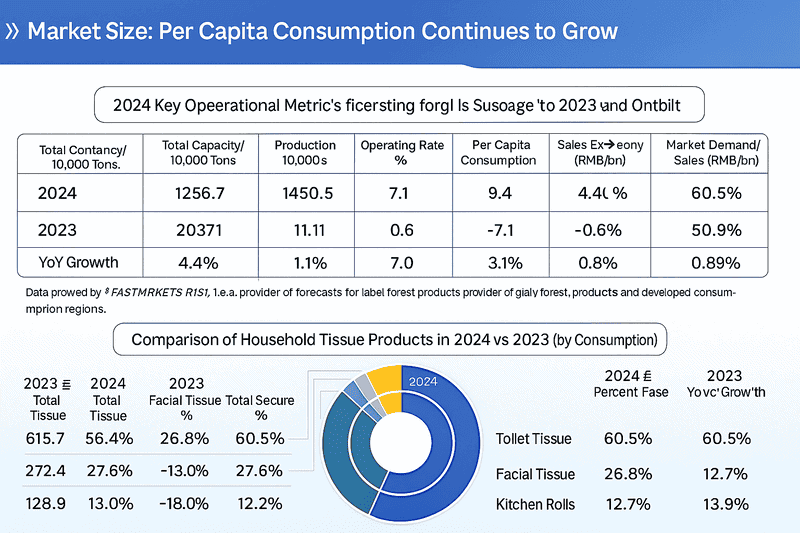
In 2024, China’s household paper industry reported an average per capita consumption of 9.4 kilograms, significantly higher than the global average of 5.8 kilograms. As both the world’s largest producer and consumer of household tissue products, China presents immense market potential.
According to the 2025 Online Tissue Consumption Trend Report, jointly released by JD Consumption and Industry Development Research Institute and a leading tissue brand, cleaning tissue products ranked first in user purchases on JD.com, maintaining a growth rate of over 30% in 2024. The increasing demand has driven diversification, resulting in a market characterized by:
- Steady growth in basic categories
- Explosive growth in premium functional products
- Thriving niche market segments
Strong Consumption Drives Brand Marketing Innovation
This robust growth has prompted brands to enhance marketing strategies. Beyond boosting ROI via online e-commerce platforms, many cleaning tissue brands have expanded into offline media, especially elevator advertising, to strengthen brand recognition and consumer mindshare. This integration of online traffic with offline visibility has created a dual-engine marketing effect, unlocking new momentum and growth paths.
70% of Consumers Prefer Specialized Tissue Products: Quality, Price & Safety Are Key
The report reveals a growing preference for refined, purpose-driven products. Among every 10 consumers, 7 choose specialized tissue products, while only 3 remain loyal to general-purpose types. This shift reflects a broader segmentation of market demand.
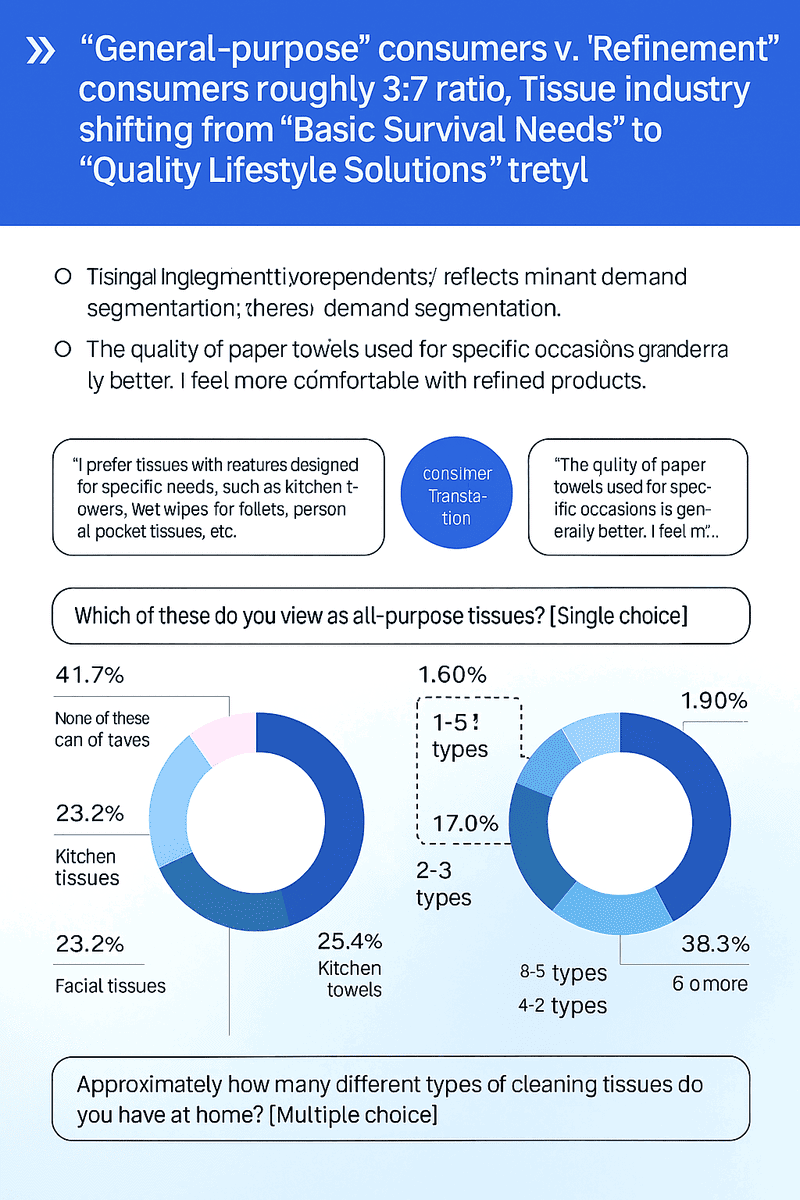
Consumer needs also vary by usage scenario. Products like kitchen paper towels and wet toilet tissue are becoming more common in daily routines.
- Kitchen Towels: Known for superior oil absorption and durability, these products are widely used in cooking, cleaning, and food preservation. Over 50% of consumers are willing to pay a premium for features like extra thickness and strong absorption.
- Wet Toilet Tissue: Transitioning from a niche to a mainstream product, wet toilet tissue has redefined hygiene routines. 70% of consumers perceive it as significantly superior to regular toilet paper, associating it with cleanliness, comfort, and health. Core buying considerations include thickness, softness, quality, and ease of dispensing.
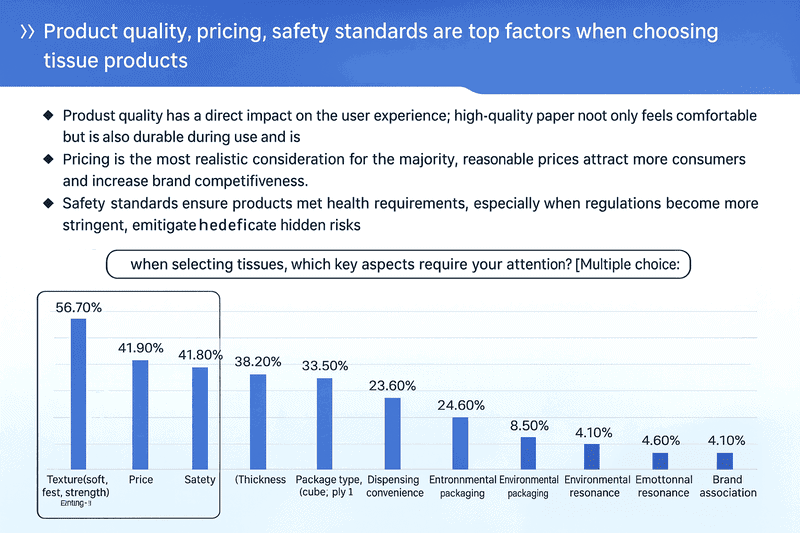
Across the board, consumers cite product quality, price, and safety standards as the top three decision factors—guiding market players to:
- Innovate through technology upgrades
- Balance pricing for competitiveness
- Uphold safety and hygiene standards
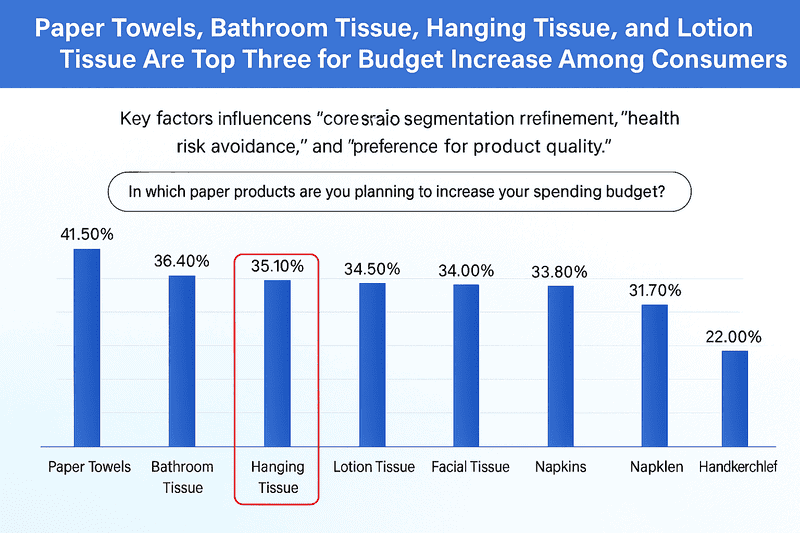
Functionality & Scenario-Based Design Drive Market Expansion
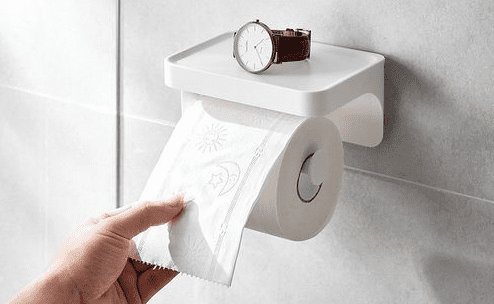
Product innovation has become a core engine of growth. Emerging formats like hanging tissue boxes and cream-infused tissues have shown strong upward momentum.
Hanging Tissue Boxes: A Practical Innovation
These solve common pain points—saving space, reducing dampness, and improving convenience. They can be mounted on walls, doors, or cabinets, particularly benefiting small-space and high-hygiene environments like kitchens and bathrooms.
- In 2024, sales of hanging tissues increased by 183% YoY, illustrating the shift toward scenario-driven innovation.
- Consumers appreciate these for being more versatile, user-friendly, and space-saving, driving widespread adoption.
Cream Tissues: Functional Upgrade of Traditional Tissues
With skincare benefits and a soft texture, cream tissues have gained traction. In 2024, user purchases rose 114% YoY.
- 30% of buyers now use cream tissues as a replacement for regular tissues.
- Most common use cases: runny nose during colds, followed by facial cleansing.
- Nearly 40% of buyers were drawn by the appeal of trying a new product category.
This innovation trend—meeting health-conscious, eco-friendly, and multi-functional needs—will continue to expand the market space, encouraging brands to develop tissues with:
- Antibacterial
- Deodorizing
- Biodegradable properties
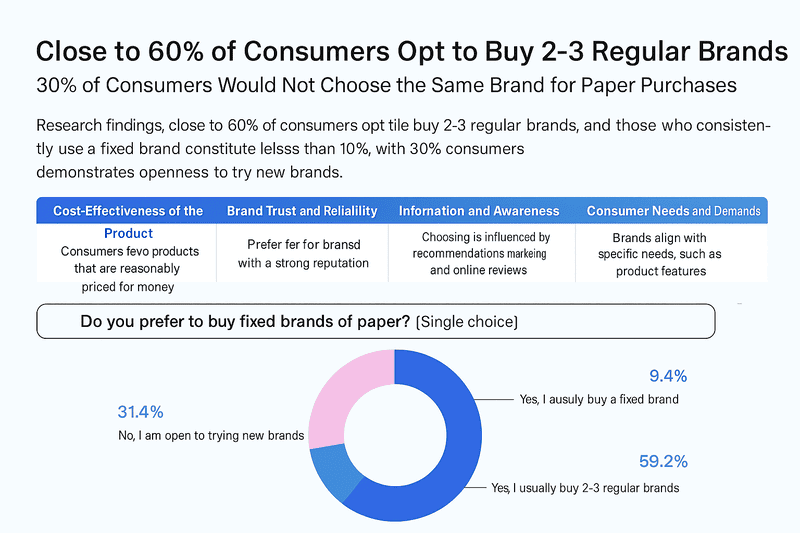
Brand Trust: A Core Factor in Purchase Decisions
Brand trust plays a pivotal role in consumer choices. Nearly 60% of buyers consistently purchase from 2 to 3 preferred brands, reflecting both loyalty and a willingness to try new products.
Why Elevator Media Matters
In a fragmented digital ecosystem, brand visibility is easily diluted. However, centralized media such as elevator screens offer:
- High-frequency, targeted exposure
- Penetration into high-traffic zones (residential buildings, offices, commercial centers)
- An immersive, distraction-free environment for forced attention and brand imprinting
Unlike passive digital ads, elevator screens lock attention in confined spaces, enhancing message retention and accelerating brand recognition.
Case-Proven Media Strategy
Successful brands—both emerging and established—have leveraged elevator media to:
- Rapidly build awareness
- Reinforce market positioning
- Convert brand exposure into sales growth
Elevator advertising has proven to be an effective brand accelerator, linking scene-based exposure with ROI-driven outcomes.

Conclusion: A Precision Revolution in Tissue Products
The rapid expansion of China’s cleaning tissue market marks a refined revolution driven by both consumer upgrades and technological innovation.
Tissue products have evolved from basic necessities to scenario-based lifestyle solutions. Emerging categories such as:
- “Oil-absorbing” kitchen paper,
- “Health-driven” wet toilet tissue, and
- “Space-saving” hanging boxes
highlight rising consumer expectations for functional, scenario-specific, and emotionally resonant experiences.
Brand competition is now a dual-track race of:
- Technological strength: Redefining product categories
- Mental penetration: Using centralized media to earn long-term trust
As the market moves toward eco-friendly, functional, and premium directions, only brands that master the triangle of “Tech Innovation, Scenario Focus, and Trust Building” will emerge as long-term leaders—making every sheet of paper a mark of quality living.
